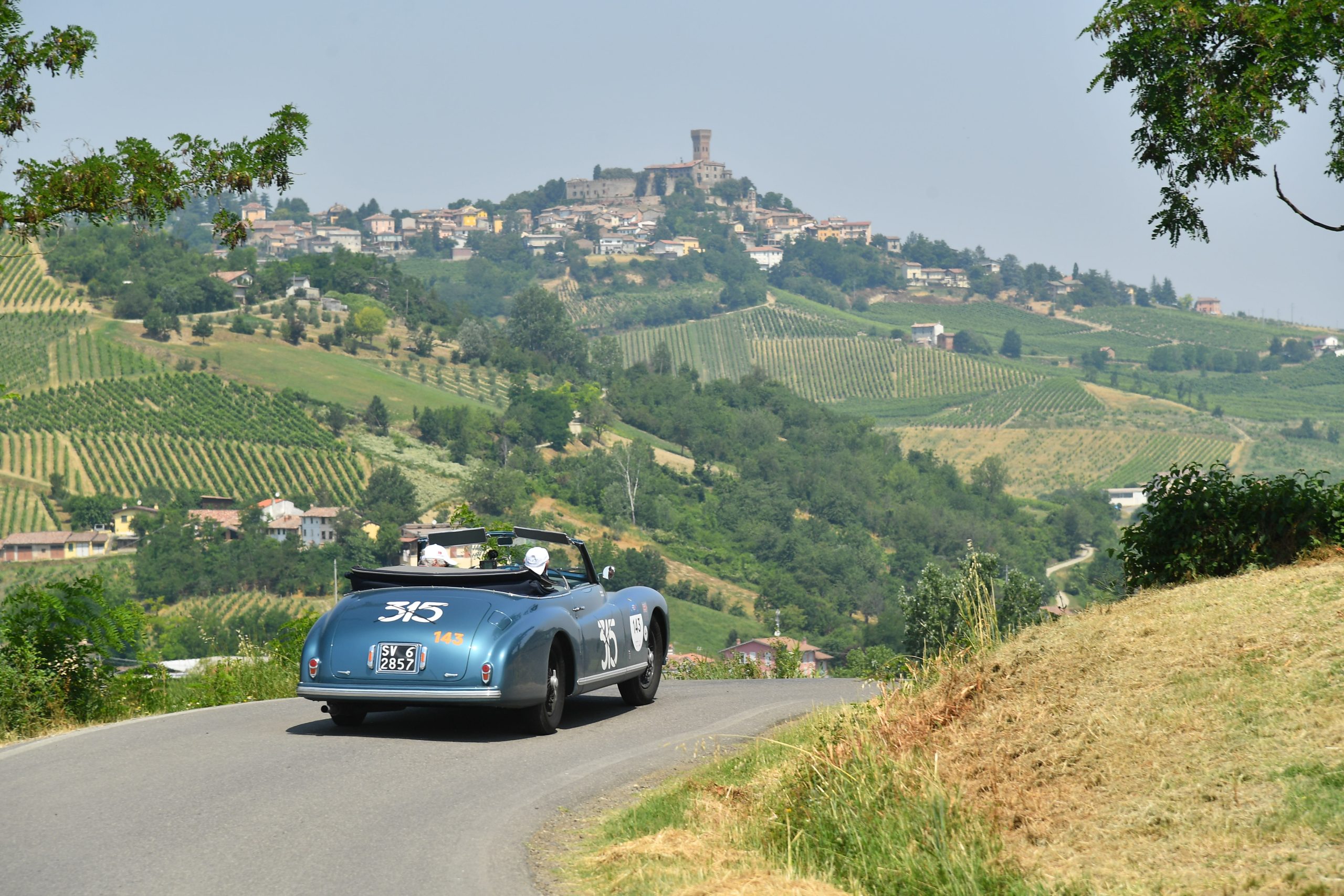
Once again, the Mille Miglia embraces the element of surprise. For its 43rd re-enactment, the iconic race draws inspiration from some of the most fascinating chapters in its history. Following the success of last year’s counter-clockwise route, the 2025 edition—scheduled from Tuesday, June 17 to Saturday, June 21—will return to the “figure eight” layout of the pre-war races, echoing the routes of the first 12 editions of the original speed competition.
For the third consecutive year, the race will span five days. On Tuesday, June 17, over 400 participating vintage cars will pass through Desenzano, Sirmione, Verona, Bovolone, and Ferrara, ending the first leg in San Lazzaro di Savena, a town near Bologna. On the second day, the teams will face the Raticosa and Futa mountain passes, tracing the same demanding roads tackled by drivers in the 1930s. After stops in Prato and Siena, the race heads to Rome before making its way north again.
After the midpoint in the capital, the third day will take drivers through Orvieto, Foiano della Chiana, Arezzo, and San Sepolcro. A return stop in San Marino will precede the end of the leg in Cervia–Milano Marittima. The fourth stage will be a true coast-to-coast experience. Departing from Cervia, the cars will drive through Forlì, then cross the Apennines to Empoli, reconnecting with part of the earlier route. Continuing west, the Mille Miglia will reach Pontedera and then the Tyrrhenian coast, passing the Naval Academy in Livorno before heading north again via Viareggio and the Cisa Pass to end the day in Parma.
On the final day, the teams will complete the journey right where it began: after five days and just over a thousand miles, the finish line parade will welcome the weary but elated drivers back on the ramp in Viale Venezia, Brescia.