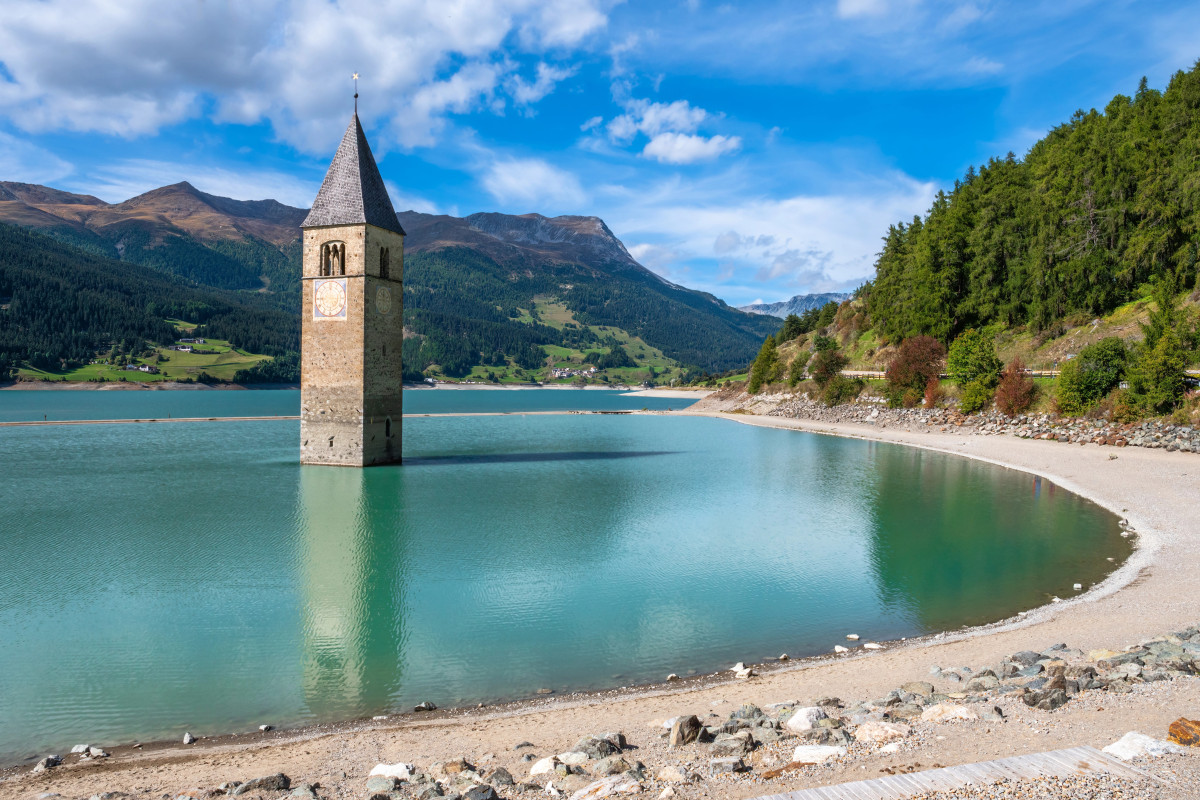
In the heart of South Tyrol, along the shores of Lake Resia, one of Italy’s most powerful landscapes rises from the water: the Romanesque bell tower of Curon Vecchia. It stands, alone, like a memory engraved into the collective imagination, displaying all that remains of the old village which was submerged in the 1950s when the construction of a hydroelectric dam reshaped the region forever.
Beneath the lake’s surface lie homes, streets, and once‑fertile fields. Above it, the 14th‑century bell tower of the Church of Santa Caterina keeps its silent watch. It has become the symbol of identity, loss, and resilience, which tells the story about the cost of progress and the deep bond between Alpine communities and their land.
Over the years, Curon has become a place of evocative charm. During the winter, when the lake freezes, visitors can walk right up to the tower, heightening the uncanny feeling of stepping into a world where time seems to stand still. According to local legends, the bells still ring on windy days, while artists, photographers, and filmmakers have turned this fragment of history into an icon of contemporary imagination.
Today, Curon Vecchia is a quiet yet powerful destination where nature and memory coexist harmoniously. It’s a place that invites you to pause, look, and listen—a reminder that landscapes can hold profound stories, even when they seem to have vanished well beneath the surface.